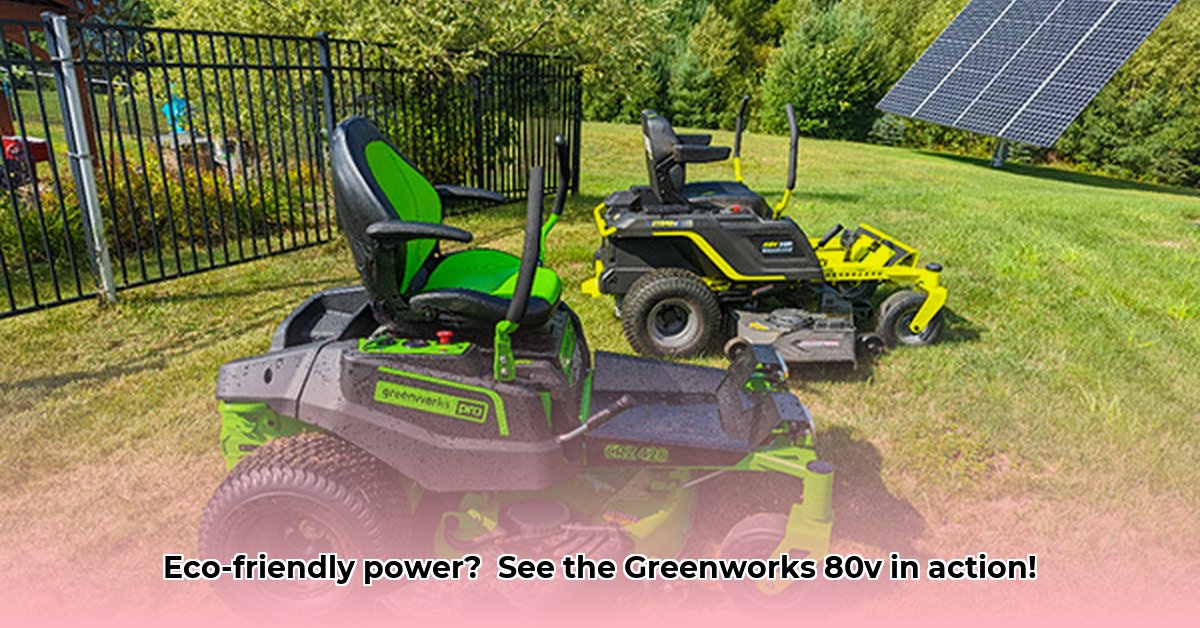
The Greenworks 80v 42-inch riding lawn tractor positions itself as an environmentally conscious option for lawn maintenance. This review analyzes its performance, sustainability claims, and overall value proposition to determine if it lives up to the hype. For larger properties, consider compact tractors.
Power and Performance: Cutting Capabilities
This electric tractor boasts a 42-inch cutting deck, promising efficient mowing of larger lawns. Greenworks advertises a capacity of up to two acres per charge. However, actual performance will vary based on factors such as terrain, grass density, and incline. Independent testing under diverse conditions is needed to validate this claim. Does the 42-inch cutting deck truly translate to significant time savings compared to smaller models, justifying the higher price point?
Environmental Impact: A Deeper Dive
The most significant advantage is the zero direct emissions during operation. This eliminates gasoline fumes and loud engine noise, contributing to a quieter and cleaner environment. Reduced maintenance – no oil changes or tune-ups – further enhances its eco-friendly profile. However, the manufacturing process, battery production, and eventual disposal must also be considered. A comprehensive life cycle assessment (LCA) would provide a more complete picture of its overall environmental impact. How does the overall carbon footprint of this mower's production compare to gas-powered alternatives?
Cost Analysis: Initial Investment vs. Long-Term Savings
Electric riding mowers typically command a higher purchase price upfront compared to gas-powered models. While the Greenworks 80v 42 offers potential long-term savings on fuel and maintenance, the break-even point depends heavily on battery lifespan, replacement costs, and the mower's overall longevity. A detailed cost-benefit analysis, factoring in these variables, is essential for a prospective buyer to evaluate the financial viability of this model. What are the projected running costs over five years, comparing fuel and maintenance expenses to gasoline-powered equivalents?
Battery Performance and Lifespan
Battery life is a critical factor for any electric device. Greenworks' advertised runtime might diminish over time due to battery degradation—a common issue with rechargeable batteries. Replacement battery costs and their environmental consequences (production and disposal) should also be factored into the overall sustainability equation. The four-year warranty provides some assurance, but doesn't fully address long-term costs. How does the anticipated lifespan of the battery compare to other similarly priced electric mower batteries?
Maintenance and Repair: Ongoing Considerations
While the Greenworks 80v 42 reduces ongoing maintenance associated with gas-powered mowers, components still require eventual repair or replacement. The accessibility of replacement parts and the ease of repair are crucial aspects affecting long-term cost and sustainability. Are repair services readily available? What is the average repair cost?
Competitive Landscape: A Comparative Analysis
The Greenworks 80v 42's 42-inch deck and advertised long runtime differentiate it from some competitors. However, a thorough evaluation necessitates a comparison with other electric and gasoline-powered riding mowers in a similar price range. This side-by-side analysis helps identify its strengths and weaknesses against the competition. Does this mower's combination of features justify its price premium compared to alternative models?
Pros and Cons: A Summary
| Pros | Cons |
|---|---|
| Zero operational emissions | High initial purchase price |
| Reduced maintenance | Battery degradation and replacement costs |
| Potentially lower long-term running costs | Uncertain environmental impact of battery production |
| Large cutting deck | Limited information on manufacturing sustainability |
| Quieter operation | Potential reduction in runtime over battery lifespan |
Conclusion: A Sustainable Choice?
The Greenworks 80v 42 offers a greener alternative to gas-powered mowers due to its zero operational emissions and reduced maintenance. However, the high initial cost and challenges associated with battery longevity and replacement necessitates a thorough analysis of its lifecycle implications. Prospective buyers must carefully weigh the environmental benefits against the financial and logistical factors before making a purchase decision. The long-term sustainability of this mower hinges on addressing these considerations.